
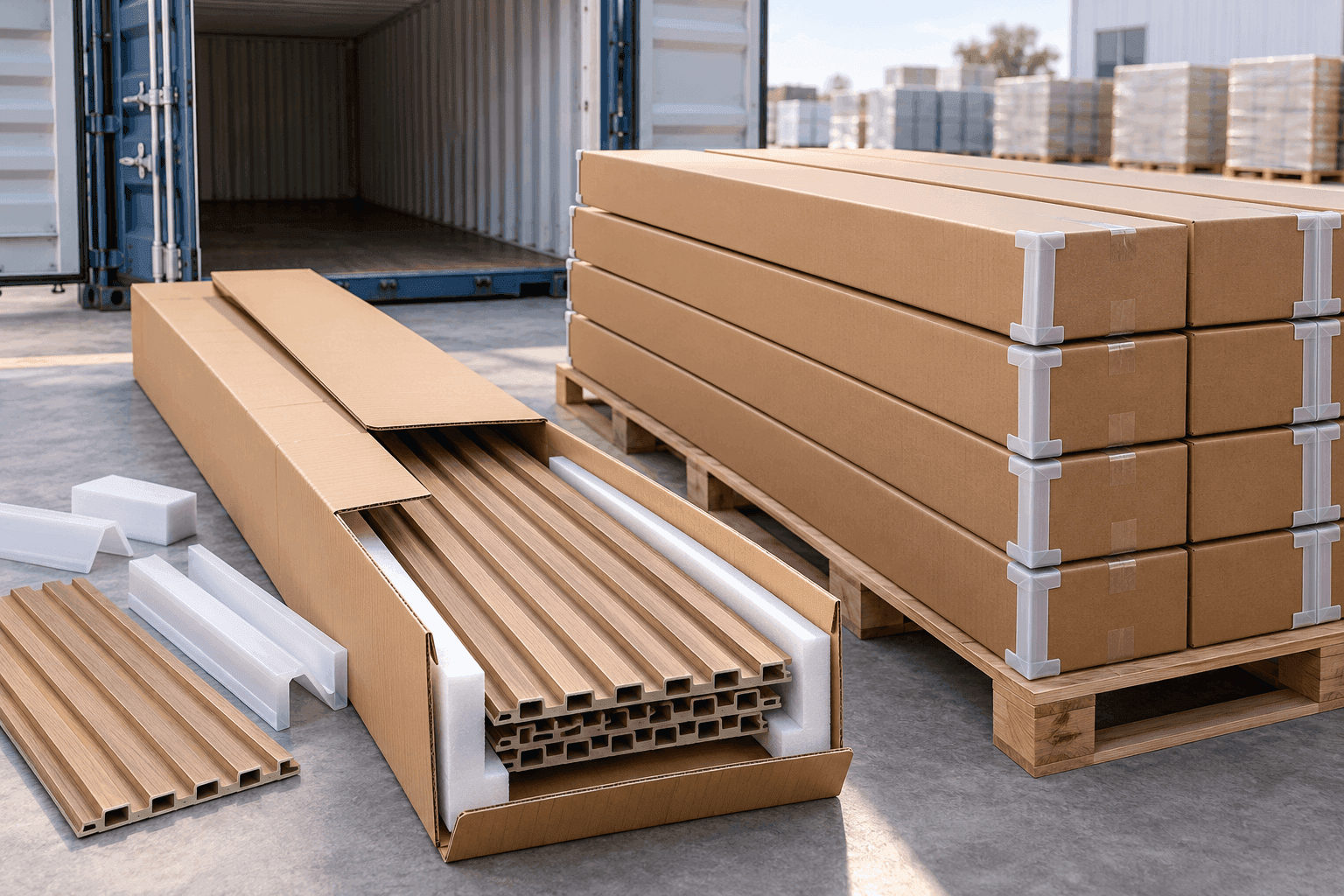
WPC wall panels are long, have decorative surfaces and may be shipped with profiles or trims of different shapes. A packing plan therefore needs more than a pieces-per-carton figure. Importers and distributors must also confirm protection, dimensions, gross weight, handling and route restrictions before approving a loading estimate.
This guide does not define a universal container quantity. Final loading depends on profile, length, finished packing, pallets, equipment payload, carrier, route, inland transport and destination rules. Confirm the data before booking.
1. Confirm profile, length and order mix
The plan starts with the exact profile reference. Width, thickness, hollow section, relief and length influence pieces per carton, required support and external dimensions. Trims do not always share the same section or packing as the main panels.
Prepare a list by profile, length, décor and colour. An order with many references may need separate cartons, additional labels and a loading sequence that supports receiving. Do not calculate everything as one standard carton.
- Profile reference and section
- Panel and trim length
- Quantity by décor and colour
- Usable coverage by reference
- Included accessories
- Requested receiving sequence
2. Define carton construction and product protection
Ends, edges and decorative surfaces are critical points. Protection can combine film, dividers, corner guards, end caps, cushioning and a suitable carton. The solution should prevent abrasive contact and limit movement without distorting the profile.
Review a packing sample with the actual product. Observe what happens when the carton is lifted, turned, stacked and opened. Clean presentation matters, but the priority is protection through the intended handling steps.
- End and edge protection
- Separation between surfaces
- Support along carton length
- Carton strength and closure
- Straps that do not mark the product
- Practical handling check

3. Verify finished-carton data
Pieces per carton is only one data point. Record coverage, external dimensions, net weight and gross weight as well. Gross weight should include panels, protection, carton and any accessories packed inside. Use finished packing data to update documents and calculations.
The label should identify product, décor, colour, length, quantity and order without requiring the carton to be opened. Ensure codes, marks and required labels match buyer approval and destination rules.
- Pieces and coverage per carton
- Verified external dimensions
- Measured net and gross weight
- Reference, décor and colour
- Order or batch number
- Approved label and code
4. Confirm pallets, wood and handling method
Pallets can support movement and receiving, but add weight, volume and access requirements. Confirm whether the length can be handled by available equipment, where forks support the load and how bending or overhang will be avoided during movement.
If packing uses wood, review destination-country rules and any IPPC, treatment or marking requirement. Pallet weight and dimensions must be included in gross weight and the loading plan, not added as an afterthought.
- Palletized or floor-loaded plan
- Pallet weight and dimensions
- Forklift support points
- Confirmed stacking limit
- IPPC or treatment requirements
- Destination unloading method
5. Calculate loading from confirmed data
A responsible estimate checks space and weight together. Use external dimensions, gross weight and carton or pallet orientation. Include supports, protection, handling clearance and any required separation; theoretical internal volume does not automatically equal usable loading space.
Compare calculated weight with permitted container payload and route limits. Carrier, equipment, inland transport and destination may impose different restrictions. The figure should remain an estimate until packing and booking are confirmed.
- Packing dimensions and orientation
- Calculated total gross weight
- Space for supports and handling
- Permitted equipment payload
- Carrier and route restrictions
- Estimate updated after packing
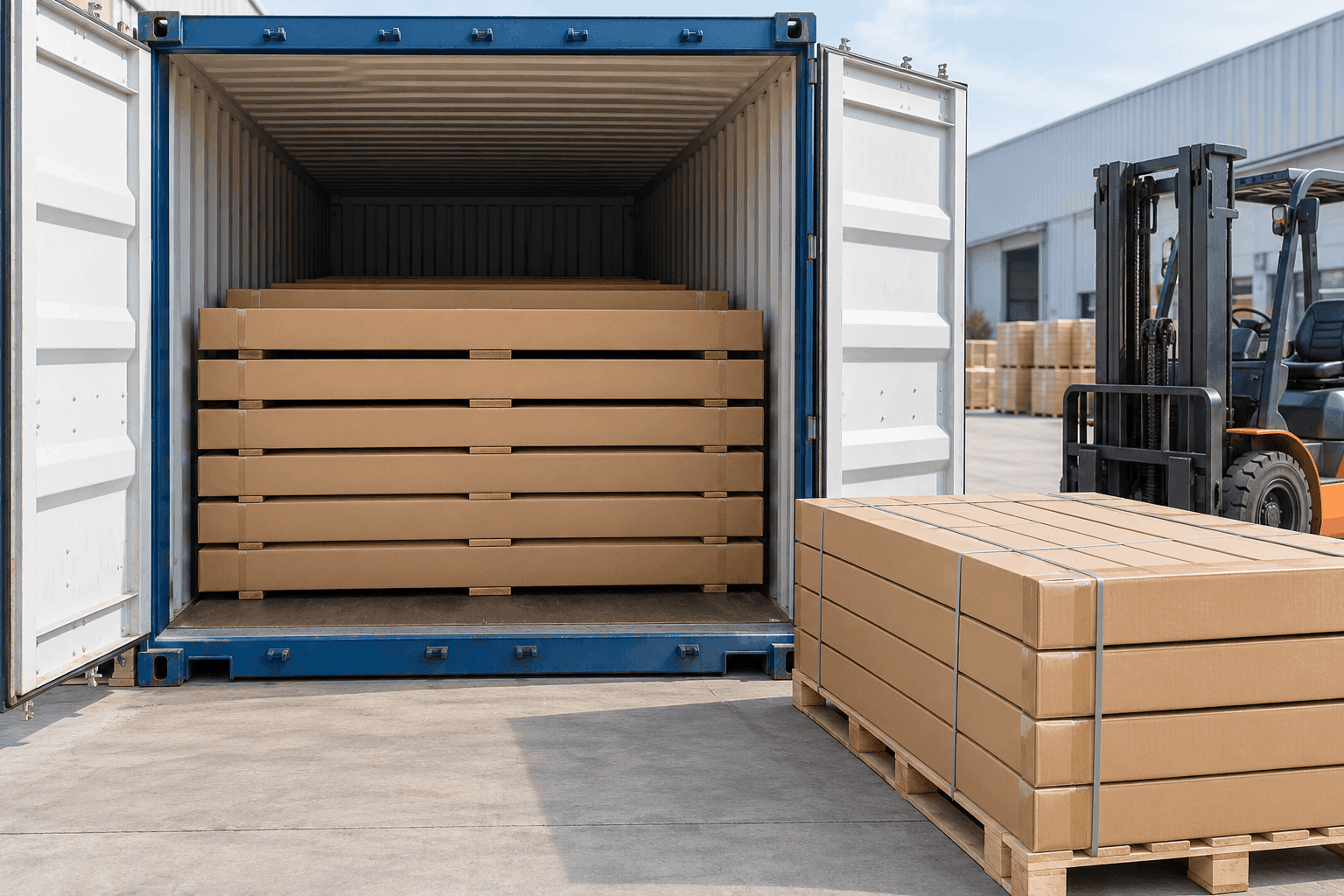
6. Plan loading, transit and unloading
Define who moves cartons, which equipment is used and in what sequence. Long pieces need sufficient support and should not be lifted from one point if that can bend or damage the packing. The sequence should protect sensitive references and support safe unloading.
Share dimensions and weights with the buyer before arrival. Confirm forklift access, fork length, maneuvering space, manual unloading where applicable and storage conditions. A plan that works at origin can fail if the destination cannot receive the same format.
- Loading responsibility and sequence
- Continuous support for long pieces
- Protection from movement and contact
- Equipment available at destination
- Unloading access and space
- Protected storage after receipt
7. Packing approval checklist
Align the quotation, sample, label, carton and packing list before shipment. Any change in pieces per carton, pallet, length or mix can change dimensions, weight and estimated loading. Record the approved version and update the documents.
Request finished-order evidence that allows product identification, protection, carton condition and loading organization to be reviewed. A complete checklist helps resolve differences before the container departs, while practical correction is still possible.
- Correct profile, décor, colour and length
- Pieces and coverage per carton
- Finished dimensions and gross weight
- Approved protection and carton
- Correct labels and marks
- Compliant pallets and wood
- Loading estimate within limits
- Matching photographs and packing list
- Confirmed unloading method
- Changes documented before shipment
WPC wall panel packing and loading FAQ
How many WPC wall panels should be packed per carton?
There is no universal quantity. It depends on profile, dimensions, weight, carton strength and handling method. Confirm pieces, coverage, dimensions and gross weight through a packing sample or finished-production data.
What protection do long WPC wall panels need?
The solution may include end and edge protection, dividers, film, a suitable carton and continuous support. It should match the quoted profile and finish and be checked for stacking, loading, transit and unloading.
Should WPC wall panels be shipped on pallets?
It depends on length, loading method, unloading, storage and buyer requirements. If pallets or wood are used, confirm weight, dimensions, forklift access and any IPPC or treatment requirements applicable at destination.
How is WPC wall panel container loading calculated?
The estimate uses finished packing dimensions and gross weight, orientation, supports, pallets, operating clearance and permitted payload. Carrier, route, inland transport and destination restrictions must also be reviewed.
What should the buyer approve before shipment?
Review product reference, pieces and coverage per carton, dimensions, gross weight, labels, protection, pallets, loading sequence and total estimate. Photographs, records and the packing list should correspond to the finished order.