
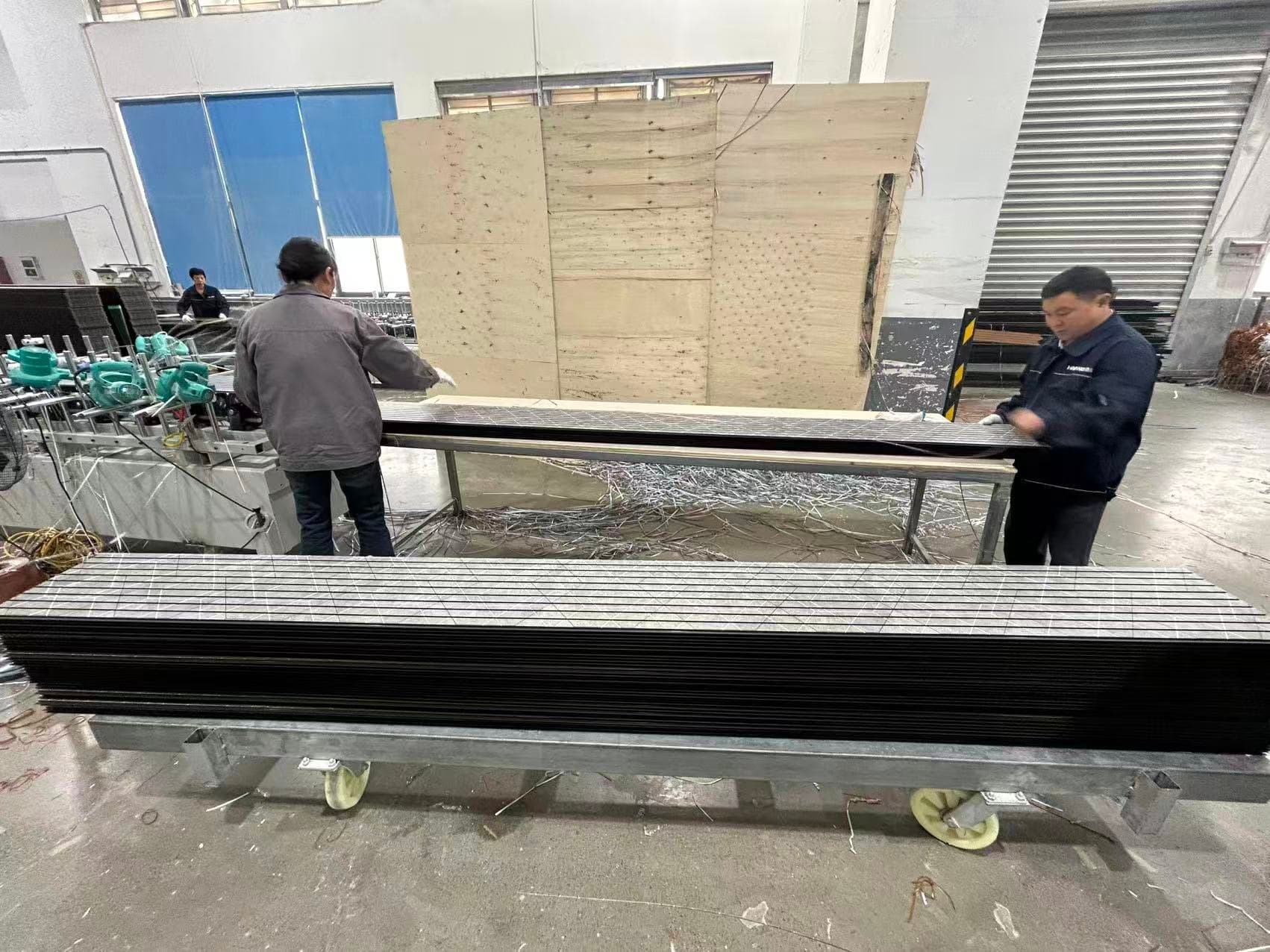
Laminate flooring is a multi-layer product with an HDF core. This guide covers composition, differences vs SPC and WPC, advantages and limitations for B2B buyers.
The terms below are confirmed starting points. The quotation, availability and approved sample govern each order.
1. Definition: what is laminate flooring?
Laminate flooring is a multi-layer product made from high-density fiberboard (HDF) covered with a printed decorative layer and a transparent protective overlay. Unlike WPC or SPC, which use plastic as the base material, laminate uses processed real wood as the structural core.
The result is a rigid product with a visual appearance identical to natural wood, but with higher scratch resistance and lower production cost.
2. Composition and manufacturing
Laminate flooring is manufactured by pressing wood fibers with resin at high temperature and pressure to form the HDF board. On top of this core, a decorative design is printed that can mimic wood, stone or ceramic. Finally, a transparent wear layer is applied that determines the AC durability rating.
The click-lock system allows glueless floating installation. Joints treated with wax or sealant provide some moisture resistance at the edges.
- Core: HDF board (high density, 800-900 kg/m³)
- Decorative layer: printed film with wood, stone or ceramic design
- Wear layer: transparent overlay (0.2 mm to 0.6 mm depending on AC rating)
- Backing: balancing layer to prevent warping
- Installation system: glueless click-lock
3. Laminate vs SPC vs WPC: key differences
Laminate, SPC and WPC are three rigid flooring categories that compete in the same markets. The main difference is in the core material and water resistance:
Laminate has an HDF wood core, SPC has a stone-plastic core, and WPC has a wood-plastic core. Only SPC and WPC are fully waterproof; water-resistant laminate is only waterproof on the surface, not in the core.
- Laminate: HDF core → best visual simulation of natural wood, lower price, NOT fully waterproof
- SPC: stone-plastic core → fully waterproof, more rigid, higher density
- WPC: wood-plastic core → fully waterproof, lighter, better acoustic insulation
- Laminate: AC3-AC5 rating → from residential to high-traffic commercial
- SPC/WPC: better suited for wet areas like bathrooms and kitchens
4. Confirmed advantages
Laminate flooring offers competitive advantages for B2B buyers supplying markets where the natural wood visual appearance and price are decision factors.
- Better price-to-aesthetics ratio: AC3 laminate with oak design is cheaper than equivalent SPC
- Scratch resistance: AC4-AC5 rating higher than SPC/WPC for the same thickness
- Visual simulation: natural wood imitation indistinguishable at 1 meter distance
- Glueless installation: floating click-lock over existing subfloor
- Hypoallergenic: does not retain dust or mites; easy-to-clean surface
5. Limitations to confirm
Laminate flooring has limitations that should be clearly communicated to the end buyer, especially regarding water resistance.
- Not fully waterproof: HDF core absorbs water if seals fail; not recommended for bathrooms or laundry rooms
- Water reaction: prolonged exposure causes irreversible swelling at the joints
- Replacement: if a plank is water-damaged, it must be replaced; cannot be repaired
- Subfloor: requires flat surface and vapor membrane if installed over concrete
- Sound: without acoustic underlayment, laminate produces a metallic echo when walked on
6. Buying checklist for importers
Before requesting a laminate flooring quotation, confirm the following points so the commercial response can be specific and arrive within one business day.
- Total thickness (8 mm, 10 mm or 12 mm)
- AC rating required (AC3 residential, AC4 commercial, AC5 high traffic)
- Color or visual design reference (oak, walnut, grey...)
- Surface type (matte, glossy, textured, registered embossment)
- Click system required (UNILIN or VALINGE)
- Quantity per design and color (MOQ: 100 pieces)
- Water-resistant joint treatment: yes or no
- Destination country and port
- Free sample request