
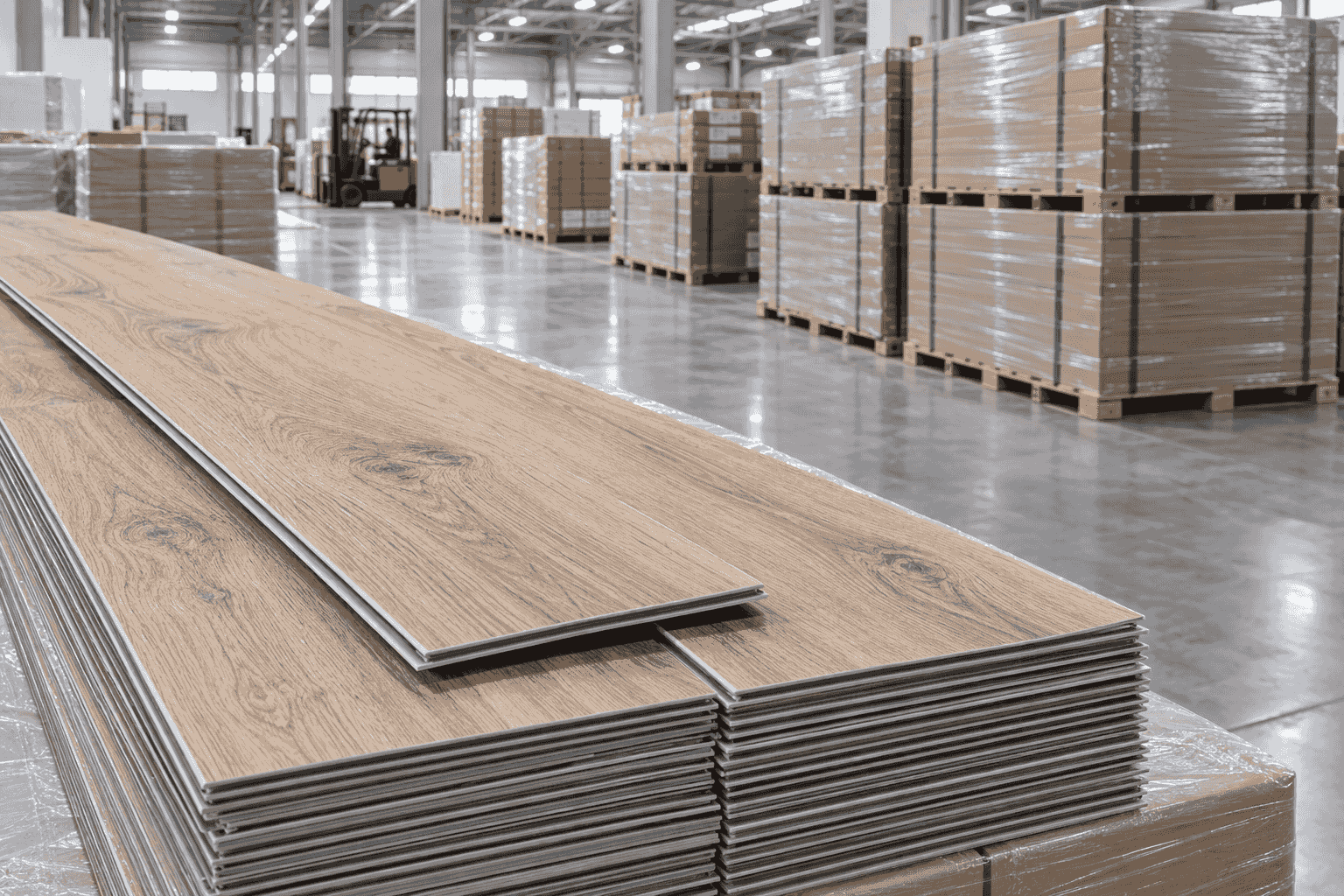
Two SPC flooring offers can show the same nominal thickness yet represent different products, costs and import risks. Core formulation, wear layer, UV coating, click system, acoustic backing, plank dimensions, packing and commercial terms all influence the final price. This guide helps importers, distributors and project buyers prepare an SPC flooring quotation that can be compared on a like-for-like basis.
SPC flooring prices can change with raw materials, exchange rates, order quantity, décor film, UV coating, plank dimensions, total thickness, wear layer, backing, click-system licensing, packing and payment terms. Always request a current formal quotation and approve the sample before ordering.
1. Why SPC flooring prices cannot be compared by thickness alone
An offer described only as “5 mm SPC” does not define the product. Two SPC flooring suppliers may quote the same nominal thickness with different plank dimensions, core formulations, wear layers, UV coatings, décor films, click profiles and acoustic backings. Their production tolerances, packing and payment terms may also differ.
Compare the SPC flooring price against one shared specification. Before evaluating the FOB figure, confirm what it includes, the currency, port of loading, quotation validity and whether click-licence fees, pallets or customized packing are included.
- Raw-material costs and exchange rate at the quotation date
- Total order quantity and quantity per décor
- Complete product specification and tolerances
- Packing, payment terms and quotation validity
- Exact FOB scope and port of loading
2. Core formulation, density and dimensional stability
A rigid SPC core commonly combines PVC resin, calcium carbonate, stabilizers and other additives. Formulation and processing influence density, toughness, click-profile machining and dimensional stability. Weight or core colour considered alone does not prove quality.
Ask for the declared density, thickness and dimensional tolerances, and the test report required by your market or project. Compare those documents with the approved sample and purchase specification. If a quotation changes materially, confirm that the formulation or tolerance has not also changed.
- Declared density and measurement method
- Thickness, width, length and squareness tolerances
- Dimensional stability and other destination-market tests
- Consistency between technical data, approved sample and production
3. Total thickness, wear layer and UV coating
Total thickness, wear layer and UV coating perform different functions. A thicker plank can change rigidity, installed height and material cost, but thickness alone does not confirm a better core formulation, a stronger click joint or a surface suitable for every application.
Request nominal thickness and tolerance, wear-layer thickness and the UV-coating specification. Selection should follow project requirements, applicable test reports and the approved sample rather than a generic use class based only on thickness.
- Nominal total thickness and tolerance
- Wear layer measured separately
- UV-coating specification
- Tests requested for the destination market
- Approved sample as the colour, texture and surface reference
4. Click system, patent licensing and acoustic backing
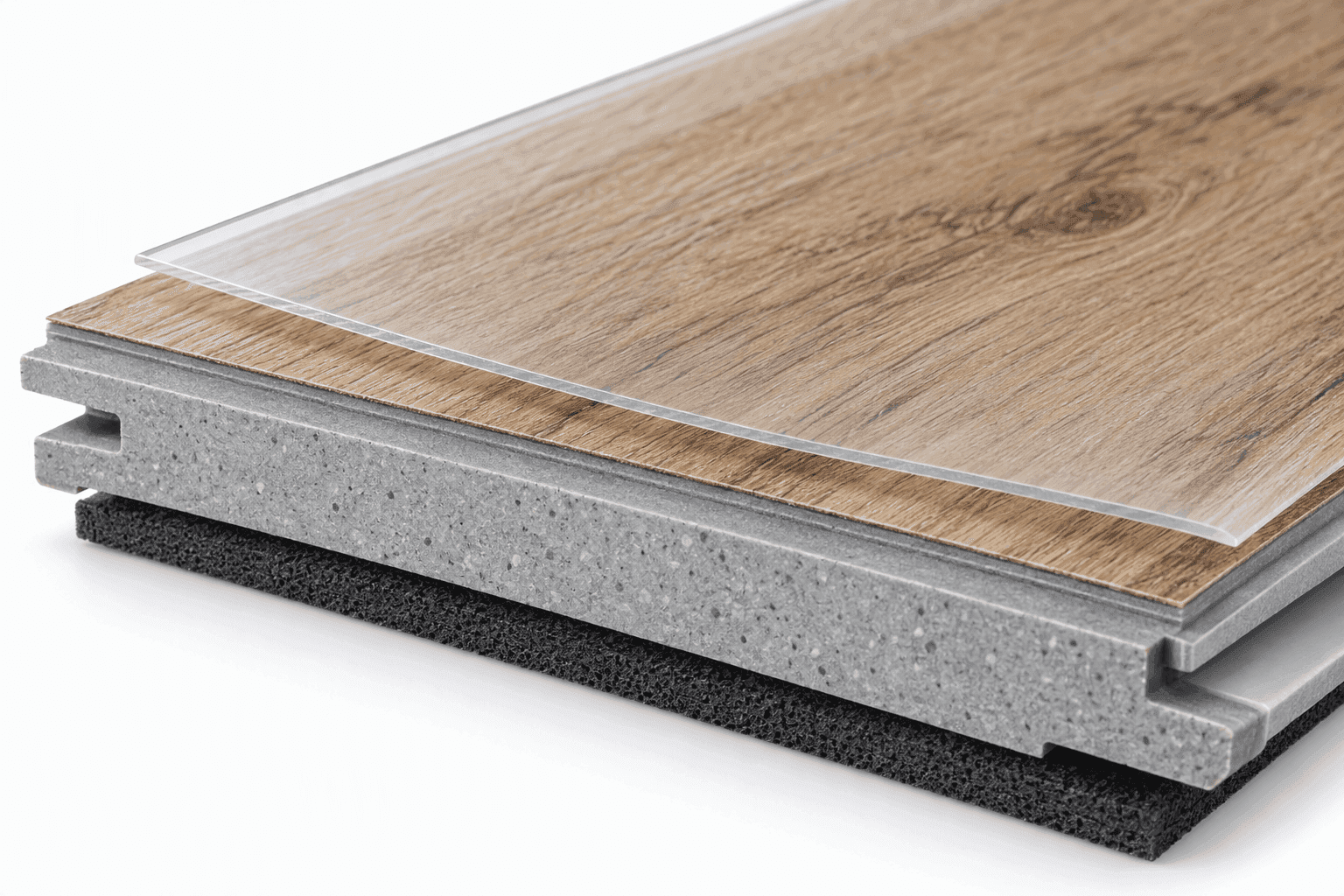
A click-system name is not a substitute for technical review. Confirm the profile, machining tolerances, licence status and whether the patent fee is included. When UNILIN or Välinge is specified, verify the documentation and scope of authorization for the quoted product; the brand name alone does not guarantee finished-plank performance.
For IXPE or EVA backing, compare material, thickness, density, bonding method and the project’s acoustic requirements. Also confirm whether the backing is included in the stated total thickness and whether it is compatible with the intended subfloor and installation instructions.
- Click profile and machining tolerances
- Licence holder, scope and fee where applicable
- IXPE or EVA type and thickness
- Backing density, adhesion and acoustic requirements
- Need for separate underlayment under the intended installation system
5. Plank size, décor film, surface texture and bevel
Plank width and length affect cutting yield, packing and installation. Décor film, pattern repeat, surface texture, gloss level and bevel can also change cost even when the basic construction appears identical.
An EIR synchronized finish requires the embossing to align with the printed grain. Review full planks under representative lighting before approval rather than relying only on a digital image. Confirm dimensional tolerance, bevel type—square edge, micro-bevel or painted bevel—and any batch-colour requirements.
- Plank length, width and tolerances
- Décor-film supplier and reference
- Pattern repeat and visual variation
- Standard texture or EIR synchronized finish
- Gloss level and bevel type
6. Packaging, container loading and logistics
SPC flooring often reaches the container weight limit before the volume limit. Estimated loading should be calculated from pieces and square metres per carton, confirmed gross weight per carton, cartons per pallet and the pallet’s own weight. The result must then be checked against container payload and the rules of the carrier, port and destination country.
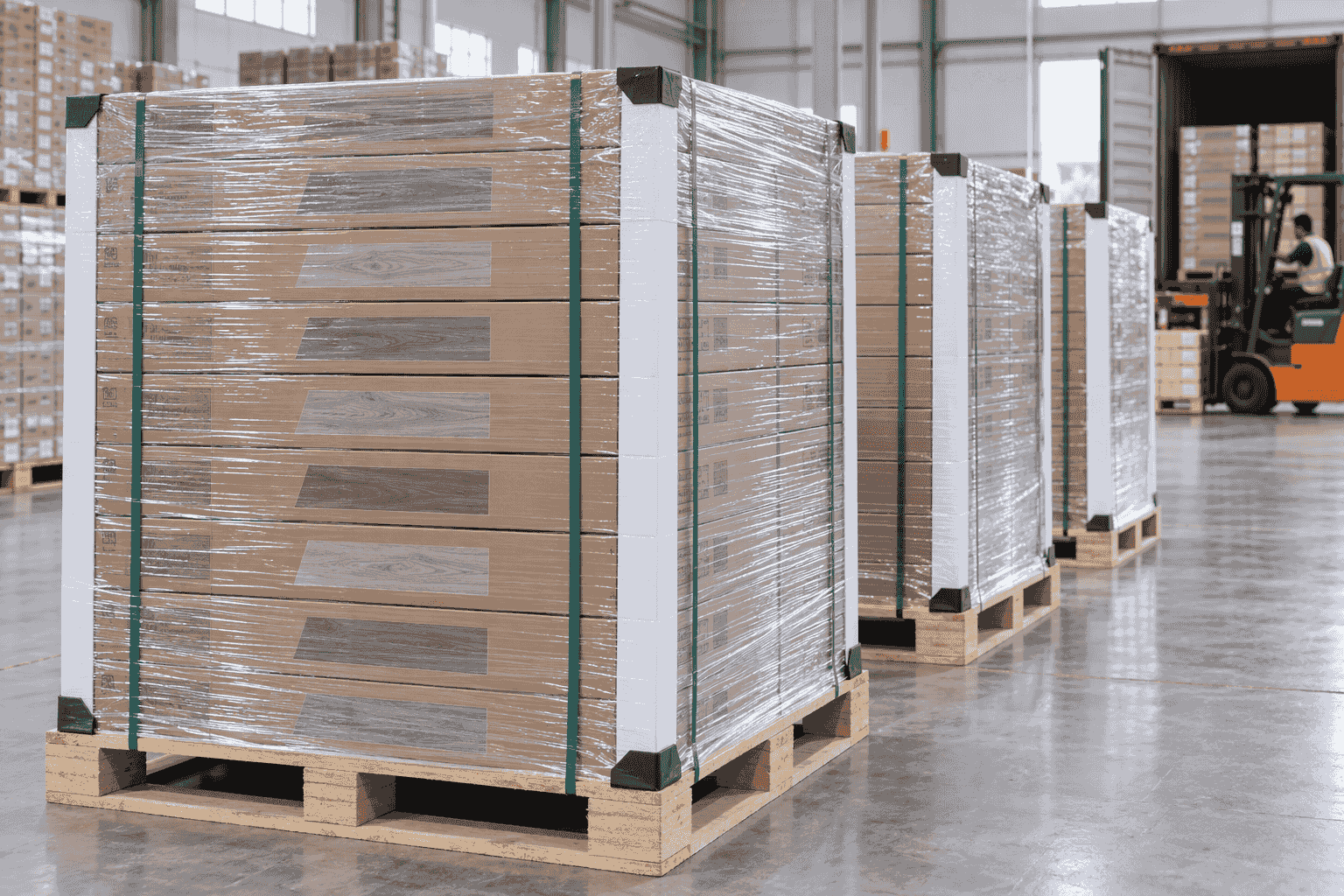
Define neutral or customized cartons, corner protection, strapping, protective film and pallets. For wooden pallets or bracing, separately confirm added weight, IPPC or fumigation requirements, destination-country wood-packaging rules and forklift handling. Final loading should only be fixed after the gross weight of the finished packing is confirmed.
- Pieces and square metres per carton
- Net and gross weight per carton
- Cartons per pallet and pallet weight
- External packing dimensions
- Applicable payload and origin/destination transport limits
- Loading estimate based on confirmed gross weight
7. Complete SPC quotation checklist
A complete request allows each SPC flooring supplier to quote the same basis and reduces later revisions. Separate mandatory requirements from open options and ask suppliers to state every exception in writing.
Quotation example: 182 × 1220 mm plank, 4 mm SPC + 1 mm IXPE construction, 0.3 mm wear layer, Välinge click system and 14 pieces per carton. This is only an example of how to format an inquiry. Final specifications, packing, loading, licence status and price remain subject to the formal quotation and approved sample.
- Plank dimensions and production tolerances
- Total thickness, wear layer and UV coating
- Décor film, texture, gloss level and bevel
- Click profile, licence and applicable fee
- IXPE/EVA type, thickness and density
- Pieces and square metres per carton; gross weight per carton
- Neutral or customized cartons; pallets and protection required
- Total quantity and quantity per décor
- Payment terms, currency, FOB port and quotation validity
- Destination port and country
- Test reports required for the destination market
- Sample approval before production
- Container estimate based on confirmed gross weight
Frequently asked questions
Why do SPC flooring quotations vary so much?
Nominal thickness is only one part of the specification. Core formulation and density, wear layer, UV coating, décor film, click system, acoustic backing, plank dimensions, packing, quantity, exchange rates and payment terms can all change the SPC flooring FOB price.
What information is needed for an accurate SPC quotation?
Specify plank dimensions, total thickness, wear layer, UV coating, backing type and thickness, click profile and required licence, surface finish, bevel, quantity per décor, packing, destination port, required test reports and expected commercial terms.
Does a thicker SPC plank always mean better quality?
No. Thickness influences construction and cost, but it does not by itself confirm dimensional stability, click-joint strength or surface durability. Compare core formulation, density, tolerances, wear layer, UV coating and the relevant test reports.
How should importers compare click systems and backing?
Confirm the click profile, licence status and fee where applicable, machining tolerances and requested test results. For acoustic backing, compare material, thickness, density, adhesion and compatibility with the subfloor and destination-market requirements.
How is container loading calculated for SPC flooring?
The estimate starts with pieces and square metres per carton, gross weight per carton, cartons per pallet and pallet weight. Because SPC flooring often reaches the weight limit before the volume limit, the final plan must be checked against container payload and carrier, port and destination-country rules.